

This is a 10-minute must-read if you’re a hiring manager. Onboarding counts more than you may realize and lasts longer than you may expect.
According to Zippa statistics:
- Employees are 69% more likely to stay with a company for three years if they experience a great onboarding process.
- Organizations with strong onboarding processes increase new hire retention by 82% and improve productivity by 70%.
- 88% of employees believe that their company doesn’t do a great job when it comes to onboarding new employees.
Source: Zippia. “17 Incredible Onboarding Statistics [2023]: HR Trends In Hiring, Training, And Retention” Zippia.com. Feb. 26, 2023, https://www.zippia.com/advice/onboarding-statistics/
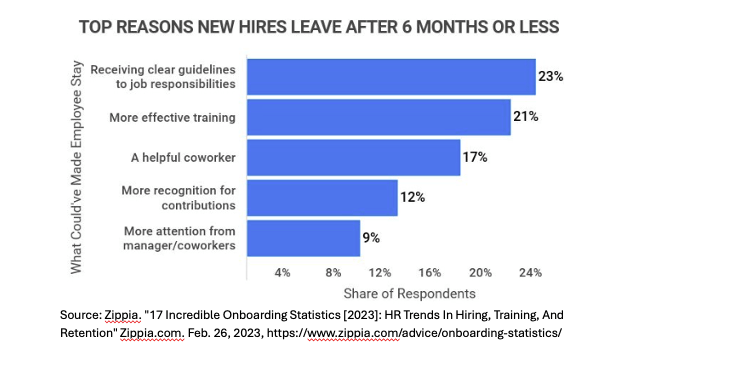
With so many doing it wrong, and so much on the line, what should we do? While a formal onboarding program is designed to help managers consistently do better, a manager is still the make-it-or-break-it factor in onboarding. If you’re a manager, here is a guide for you. This roadmap is meant to flex with your needs.
Pro tip: If you need someone to get up to speed quickly, you can fast-track this by diving into the content for what they need to know now, but fair warning, you should still come back and fill in the skipped content as soon as possible. A poor onboarding experience is risky to both the new hire and the organization. Just as onboarding too quickly is problematic, onboarding too slowly can be equally detrimental. By the end of the second or third week, a person should have experienced the level of pressure they will be expected to endure during their tenure.
Pre Day-One
Onboarding planning begins way before you have an opening. If this is a net new position, it begins when the product or service is identified. It begins with a map of what the role entails and the expectations you have for it, which goes beyond a job description.
If this is a replacement position or a duplication of another role, it begins by observing the behaviors of the existing talent. As a manager, take note of what that person does well and where there are opportunities for improvement. Hopefully, you have the foresight to have the person in their role create their Standard Operating Procedures (SOPs) or how-tos and/or review them for updates.
Consider the qualities of people who succeed and the differences between those who do and those who don’t. Integrate these insights into the onboarding plan to set the new hire up for success.
Before the new hire starts, think about the kind of network you want them to have.
- Who are their external customers?
- Who are their internal customers?
- Who are their peers who will form collaborative teams with them?
- If they have any direct reports, who are they?
As the proverb goes, “The best time to plant a tree is 20 years ago. The second-best time is now.” If you didn’t plan everything before hiring your new starter, that’s ok. Gather what you can now and consider involving the new hire in documenting their learnings.
About 4 weeks before the first day (this varies by company and by country):
- The new hire completes pre-boarding forms, including signing employee contracts.
- The manager arranges for a computer, desk space, phone, and other logistics.
- Request necessary technology and licenses.
- Add the new hire to distribution lists and shared environments like SharePoint, Teams, groups, and files.
- Plan who the new hire should meet and inform relevant people. Send a note to each person, including the new hire’s name, role, start date, and topics for discussion.
About two weeks prior to the first day:
- Prepare a welcome packet with information about where to go, who to ask for, company culture, and dress code. Even if the work environment is ultra-casual, inform the new hire to reduce stress over attire. If they are onsite, include details about amenities, break room, and lunch plans.
One week before the start date:
- Call the new hire and share Day 1 instructions, including parking, security processes, dress code, lunch plans, and office space details. Inform them of anything they need to bring, such as a government ID or a personal device. Walk them through the first day’s schedule. If attending new hire orientation, ensure they know what to expect, where to go, and who to ask for. If they are working remotely, explain system access and share the week 1 schedule.
Pro tip: have some business swag ordered for them to have on their desk for day 1. If you cannot do that, at least get a pad of paper and a couple of nice pens. Even though many people use computers or personal devices such as their cell phones to take notes, on Day One a notepad is very handy.
First Day
Welcome the new hire but don’t overwhelm them. Let them get into the new systems and meet a few key people. Have a welcome pack ready with resources and system links.
The first day is about welcoming the new hire, handling “comfort logistics,” and introducing company culture.
The first day is about welcoming the new hire, handling “comfort logistics”, and introducing company culture.
“Comfort logistics” are logistics that are suited to help the new hire – such as how to sign up for benefits, how they will get paid (including setting up direct deposit where available), how to access email and voicemail, and where and when to take breaks.
Arrange for someone to meet them in the lobby (preferably their direct line manager, but a buddy or host is acceptable if the line manager is not local). After showing them to their desk, give them a tour and introduce them to key office personnel. Don’t forget to stop by the break room, restrooms, and most importantly, IT. Share details about how to get their badge photo and key card.
Pro tip: Plan for someone to take the new hire to lunch on the first day. Know ahead of time if your new hire is comfortable in large groups or prefers smaller settings. A shy person might prefer lunch with a well-chosen peer, while someone eager to make an impact might prefer lunch with a senior leader. A social person may enjoy lunch with the whole team. When in doubt, many would enjoy a low-key lunch with their new boss, where they can ask questions and start building a working relationship.
On their first day, their direct manager should spend some time with them, welcoming them to the company and discussing:
- What to expect in the onboarding journey
- Key players they will meet
- Key facts about the company, department, or role
Even if another team leads the onboarding program, find a way to personally welcome your new hire.
If the new hire is remote, don’t forget to check in early to ensure they received their login information and can set up their computer. Few things are more frustrating for a new hire than planning a great first day and feeling like they’re letting people down because they can’t log in.
First-Day Checklist for the Manager:
- Welcome them in person or with a host
- Have your new hire sign any incomplete employee contracts
- Allow time to set up the computer (typically 1-2 hours, but some companies may take all day)
- Allow time to set up the phone and voicemail
- Send an announcement to the team welcoming the new hire
- Cover the agenda for the day and the first week
- Share the company overview (Mission, Vision, Values) – this is your opportunity to introduce the new hire to your company culture and, more importantly, the culture you want to create in your team
- Introduce them to a Buddy/Host/Mentor – someone other than the manager who can help them navigate the company. Common topics include how to navigate HR topics, the company intranet, internal websites, and where commonly stored information is. This person can share unspoken guidelines and expectations necessary for success and introduce the new hire to other people in the company
First Week
The first week is about “success logistics” and team culture. “Success logistics” are essential for the new hire to succeed at their job, including necessary tools, training (though not all training may need to be completed this week), building relationships, and team building. Set the new hire up for success in owning their development and navigating your organization. This may involve navigating people and tools and showing them where key things are housed. During the first month, your new employee will meet new people. Prepare them to have the best meetings possible by having them prepare an elevator pitch about who they are and what they hope to accomplish in their role.
First Week Checklist for the Manager:
- Have the employee complete onboarding forms: Such as I-9 or local workforce forms.
- Review HR policies and Code of Conduct: Provide them the opportunity to review these documents.
- Schedule safety training content: Depending on the content, this may need to be completed in the first week or may be delayed.
- Cover HR topics: Such as benefits setup and expense policies.
- Order business swag: Show them how to order items like polos with logos, jackets, coffee mugs, or even business cards or letterhead.
- Locate the staff directory: Show them how to find this.
- Team overview: Provide them with an introduction to what the team does.
- Terminology: Start a terms and acronyms sheet so they can interpret the local lingo right away.
- High-level role expectations: Introduce these on Day 2 or the first actual working day. Setting expectations early is crucial in the onboarding process.
- Introduction to peers and stakeholders: A simple hosted drop-by hello is ideal for this first week. Before longer 1:1 meetings with peers and stakeholders, which should occur during the first month, give the new hire an overview of their own responsibilities and your expectations of the new hire. That way they are prepared when stakeholders start setting their own expectations.
Pro tip: Plan an activity with key stakeholders and the new hire. This can be a lunch among peers, an easy or fun project, or even a dinner with a senior exec. Leverage opportunities to build genuine relationships early on.
- Active work introduction: What will they be working on right away.
- Product or service knowledge: Cover any necessary knowledge.
- Required training: Introduce required training and deadlines.
- Tools training: Train them on the tools used in the first week. There’s time later to train on other tools.
While this may sound like a lot, the above content only takes a few hours to cover. Give them the gift of a solid foundation, and you will reap the rewards later.
First Month
Set the new hire up for success by equipping them with the knowledge they need for their job. While they bring many skills to the table, you should show them how to find out what they don’t already know, including where to find content and who the key knowledge holders and well-networked individuals are in the office.
The first month is about making sure your new hire will succeed long-term. This is a great opportunity to give them clear goals with achievable deadlines and confirm whether they have the skills for the longer road ahead or if you need to help them develop additional skills for their journey. During this time, you’ll be showing them the concrete SOPs along with the unspoken culture of “how” to get the job done. But you’re also going to give them the keys to the city: a network that will help them find what they don’t know. This network is going to be stronger than you ever could be by yourself.
You’re also going to give them the keys to the city: a NETWORK that will help them find what they don’t know.
Be sure the new hire has a rotation of meeting key players they will be working with. This includes key internal and external clients, peers, and support personnel who will enable their success. The new hire should be ready to ask and answer how working with this person will help them and how they can help that person. For those meetings, whether face-to-face or over a call, I recommend the new hire meet key stakeholders during 1:1 meetings where the purpose is to make introductions and discuss how they support each other. These meetings are anywhere from 15-30 minutes long. When thinking of the stakeholders – think of everyone they will be supporting and everyone who will support them. Who’s going to set them up for success? Who will they need to impress if they are to succeed?
I like having other people take a rotation of showing new hires different aspects of their job so that they don’t hear everything from one source, namely me as their manager. I divide up topics among peers and stakeholders and give them something specific to chat about. However, I have found that not all people intuitively know the points I want to have made on the topic.
Pro tip:
Pro tip: Think about all the topics your new hire needs to learn and create key talking points around each one. You can do this yourself or have your experienced resources create talking points that you review for gaps. Share the talking points with both the experienced resource and the new hire. That way, the resource knows what to cover, and the new hire is empowered to ask questions if the resource doesn’t cover a topic. They keep each other accountable for ensuring the conversation stays on track.
If the trainer wants to cover additional topics, that’s encouraged too. They have the flexibility to hit all the key points in one meeting or in a series of meetings—their time is theirs to use as they wish.
During the first month, focus topics on culture and networking, understanding who the knowledge holders are and how best to work with them, training on any tools that will be used in the first quarter, market-specific education, and process training. Set goals and timeframes for when those goals should be achieved and touch base weekly.
This is also a month for you to observe your new hire’s behaviors closely. If they are not acclimating or showing the skills you hired them for, identify it in this month and communicate a plan to course correct with them as soon as possible. One can always tell a superstar right at the gate, but don’t let that fool you about late bloomers. Some of my most solid employees were late bloomers who had a larger learning curve than I hoped for, but once they got past it, they became the best trainers for others.
However, sometimes managers have warning signs in front of them but are afraid to take swift action in this first month. Remember, some of my best employees took a long time to learn their roles because they learned it meticulously. They asked many questions, and once they got it down, they were the best trainers available. These people may not yet have all the success skills, but they are very engaged and eager to grow, and you can see their growth, even if not at the pace of your expectations. These people are worth the wait.
But not all slow adopters are eager to learn. Some will not succeed in the long run. You’ll be able to identify those most at risk of not being successful because they are off track and not showing significant effort in making it up. They do things your top employees wouldn’t dream of, such as making excuses that may sound reasonable to them but don’t feel justified to you. This is your month to act swiftly before their apathy affects team culture and morale.
First 90 days
Set the right expectations and goals with the new hire and develop a graduated plan where goals increase over the first 90-120 days. During the first 90 days, check in with your new hire not only on their progress towards meeting goals but also on how they are growing their knowledge. This doesn’t have to be a formalized assessment process, but you should rotate through all their responsibilities to ensure comprehensive training. During this time, inspect what you expect to ensure your employee understands and aligns with expectations. Be sure to transition out of this inspection mode quickly to avoid being seen as a micromanager. Make sure your employee knows this close oversight is temporary.
Plan monthly check-ins on progress to provide and receive feedback. New hires often have valuable insights into improvement opportunities. I like to ask new hires to list what they wish they had known or provide feedback on the onboarding process for future hires.
After the first 90 days, a new hire should be working at a long-term pace. Some roles take longer to learn, but 90 days is generally a good stabilizing point. Between 3-6 months, employees may face significant challenges that test their abilities. They might even make significant mistakes, but that’s okay; they will learn from them and be better for it in the long run. That, too, is a journey and learning opportunity and they will be humming back along on path in no time.
Here’s a quick overview of what that onboarding roadmap looks like:
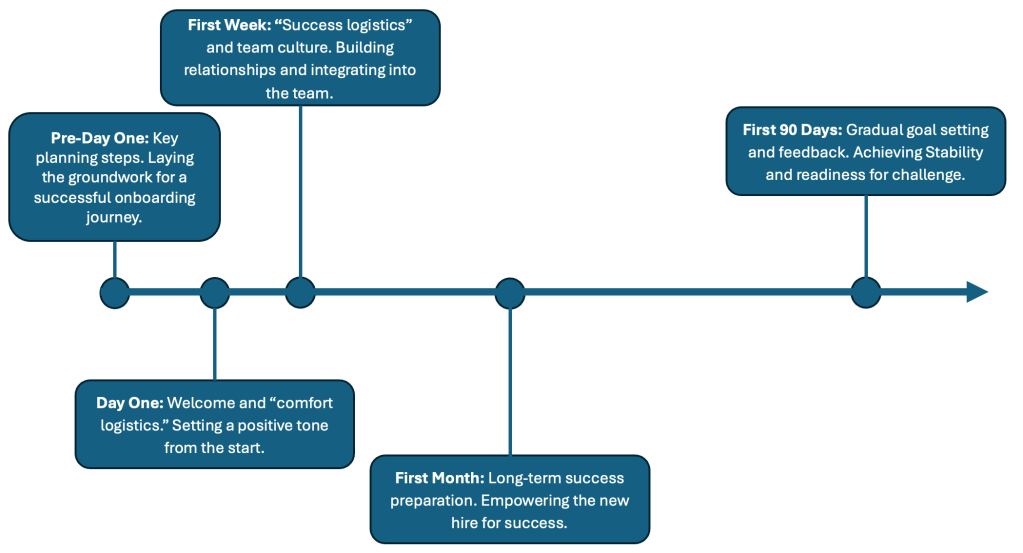
Onboarding is more than just a process—it’s a journey that shapes an employee’s future within the organization. By thoughtfully planning and executing each step, from the initial welcome to ongoing support, you set the stage for long-term success and fulfillment and reduce your chances of the employee leaving. The roadmap provided here is designed to adapt to the unique needs of each new hire, ensuring that they are not only equipped with the skills and knowledge they need but also feel valued and integrated into the company culture. Remember, a successful onboarding experience paves the way for a productive, engaged, and loyal workforce. Let’s make every new hire’s journey an inspiring one.

 MintROI